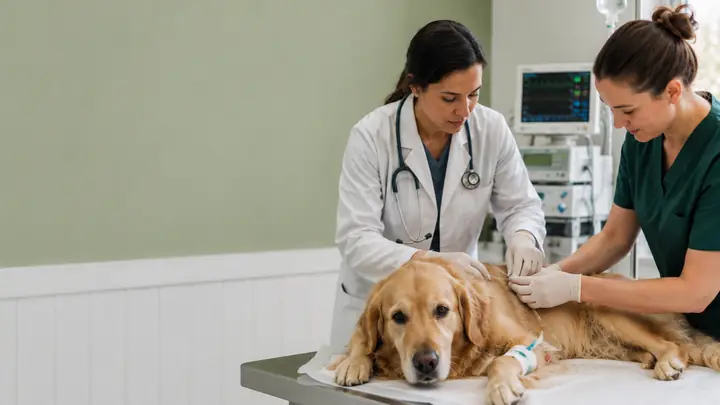
Relevant image for this emergency veterinary cost guide.
What is emergency surgery?
Emergency surgery combines the cost of urgent assessment and stabilization with anesthesia, the operation itself, supplies, surgeon time and postoperative hospitalization.
The right choice is not automatically the cheapest option. For your pet, the decision can depend on clinical severity, hospital capability, whether a specialist is needed, how quickly care is required and what follow-up support is available. Use cost information to prepare for a veterinary discussion, not to replace one.
What changes the cost?
The final bill for emergency surgery is usually made up of several separate services. Common cost drivers include procedure complexity, stabilization, surgeon, anesthesia, ICU care. A quote that looks lower may exclude diagnostics, anesthesia, medications, pathology, hospitalization or follow-up, so comparing only the headline number can be misleading.
| Cost component | Why it may be needed | What can change the amount |
|---|---|---|
| Veterinary exam | Confirms the clinical problem and treatment plan. | Routine vs emergency visit, specialist involvement. |
| Diagnostics | Emergency exam, bloodwork, imaging as needed may be part of the workup. | Number of tests, imaging views, send-out labs, specialist interpretation. |
| Anesthesia / sedation | May be required for surgery, painful procedures or precise imaging. | Procedure length, patient risk, monitoring level and medications. |
| Procedure / treatment | The core service being performed. | Procedure complexity, stabilization, surgeon, anesthesia, icu care. |
| Hospitalization / aftercare | Monitoring, fluids, medications and recovery support. | Length of stay, ICU level, repeat testing and complications. |
What tests may be needed first?
Before or around emergency surgery, a veterinarian may recommend emergency exam, bloodwork, imaging as needed. The exact workup depends on the pet's age, symptoms, physical exam and how urgent the problem is. Some tests are used to confirm the diagnosis; others are used to make anesthesia or treatment safer.
How to compare veterinary estimates
When asking for an estimate, request an itemized range and ask what is included. Useful questions include whether the estimate covers pre-procedure testing, anesthesia or sedation, medications, implants or disposables, overnight care, pathology, repeat imaging and follow-up visits. This is a better comparison than hunting for one national number and pretending every hospital provides the same package.
- Ask whether the estimate is a fixed quote or a low-to-high range.
- Ask what could cause the total to move toward the high end.
- Confirm whether medications, pathology, implants or repeat imaging are included.
- For surgery, ask what postoperative monitoring and pain control are provided.
- Ask what follow-up visits are included and what would be billed separately.
Questions to ask the veterinarian
- What diagnosis or finding makes this treatment appropriate?
- Are there reasonable alternatives, and what are the trade-offs?
- Which diagnostics are necessary before treatment?
- What is included in the written estimate?
- What complications or additional services could increase the total?
- What follow-up care will be needed at home or at the hospital?
Bring the cost-component checklist and questions above to your veterinary appointment. For product-focused care, the PawPulse ecommerce store remains separate at PawPulse.pet.
Related guides
Frequently asked questions
What affects emergency veterinary surgery cost?
Major factors include the exact diagnosis, procedure complexity, diagnostics, anesthesia or sedation, hospital type, location, medications, hospitalization and whether specialist care is needed.
Does the quoted price usually include diagnostics?
Not always. Ask whether the estimate includes examination, bloodwork, imaging and other testing needed before the procedure.
Does anesthesia cost extra?
It may be bundled or itemized. Ask whether the estimate includes pre-anesthetic assessment, monitoring, medications, airway management and recovery.
Can emergency timing increase the bill?
Yes. After-hours staffing, urgent diagnostics, stabilization and intensive monitoring can increase the total cost.
Should I ask for an itemized estimate?
Yes. An itemized low-to-high estimate makes it easier to understand what is essential, what is conditional and what may be added if the clinical situation changes.
Can I compare prices between veterinary hospitals?
For planned care, price comparison can be reasonable, but compare the same scope of services. A lower quote may exclude diagnostics, medications, pathology or follow-up.
Is the cheapest option always appropriate?
No. Hospital capability, surgeon or clinician experience, monitoring, pain control, emergency access and follow-up can matter as much as the quoted price.
When should cost comparison stop and urgent care begin?
If your pet has signs of a true emergency such as breathing difficulty, collapse, uncontrolled bleeding, severe trauma, suspected poisoning or inability to urinate, seek veterinary care promptly rather than delaying for price shopping.
Methodology and sources
Cost content on PawPulse Reviews follows our veterinary treatment cost methodology. We do not invent exact prices when reliable evidence is not available. See our sources and evidence standards for how veterinary claims and future price ranges are handled.